The role of digital platforms and social networks in recruitment

12/25/2025
39

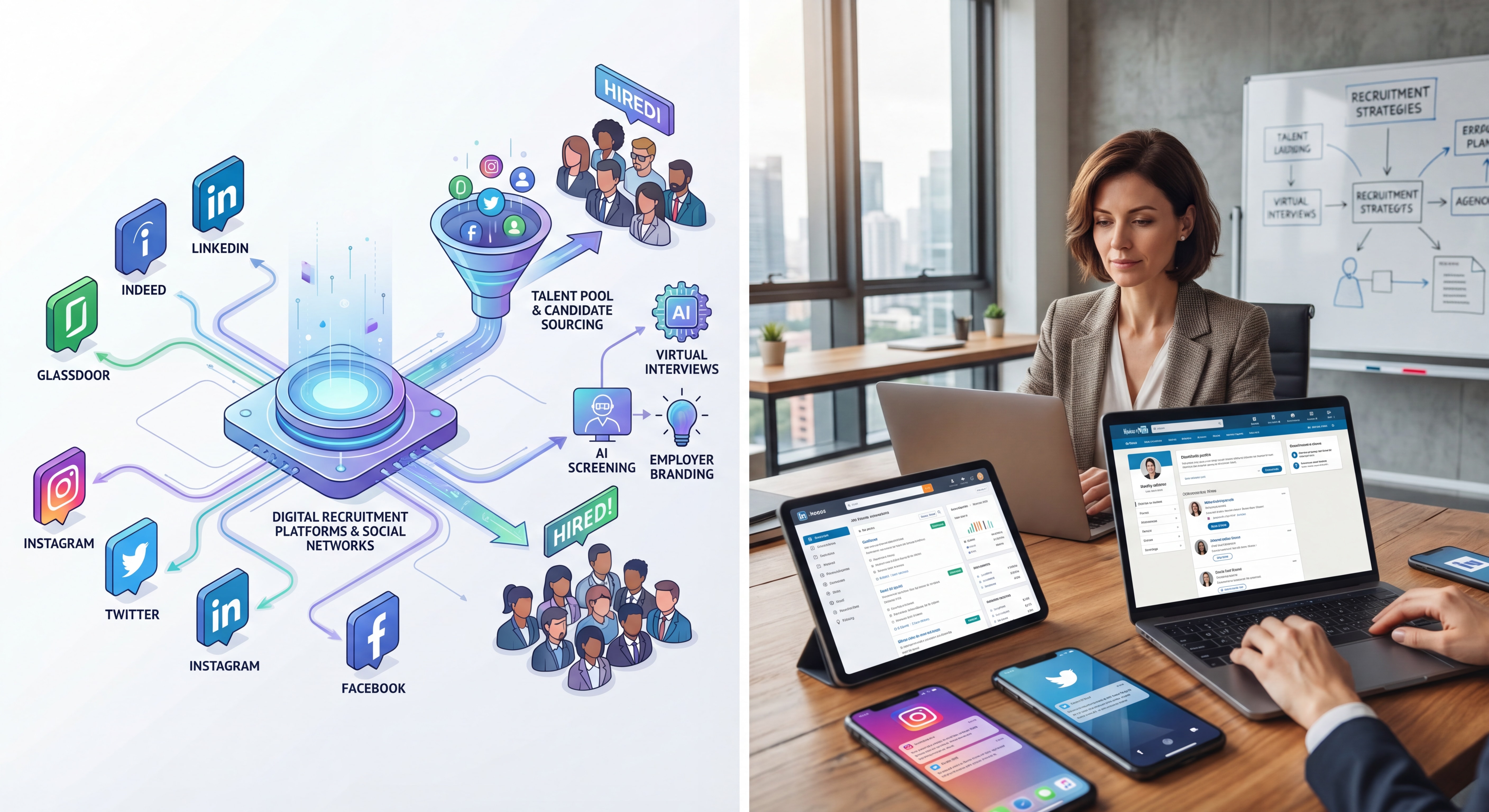
Recruitment has undergone a major transformation with the rise of digital platforms and social networks. These tools are no longer simply communication channels, but strategic levers for attracting, assessing, and engaging talent. In a world where digitalization is omnipresent, ignoring their power is no longer an option. Understanding their role is crucial for any company that wants to remain competitive and successful.

Increased Visibility for Companies and Candidates

Platforms like LinkedIn, Indeed, and Glassdoor have democratized job searching and recruitment. They allow companies to publish their job postings and exponentially strengthen their employer brand. The key advantage is twofold. For Candidates, they can discover company culture, values, and opportunities in just a few clicks. Employee testimonials and public ratings offer a level of transparency that paper job postings could not provide.

However, for companies, they benefit from a global audience, which significantly expands their talent pool, especially for rare profiles. A strong employer brand on these platforms reduces the cost per hire by up to 50%!

Faster and more targeted recruitment

The era of manually sorting CVs is over. Thanks to algorithms and advanced filters, recruiters can now target specific profiles based on skills, experience, and even willingness to change jobs. LinkedIn Recruiter is a good example: it offers powerful features for searching passive candidates—those who aren't actively looking but are open to hearing a better offer. Targeting these high-caliber profiles reduces recruitment time and significantly improves the quality of hires.

In addition to Artificial Intelligence (AI): AI is starting to analyze data to predict a candidate's success, making the process not only faster but also more objective and efficient. The Rise of Social Recruiting: Social networks are no longer just for leisure. Platforms like Facebook, Instagram, and TikTok have become major tools for attracting talent, especially younger generations and creative professionals. Why is it so effective? Where are the candidates? Simply put, candidates spend a lot of time on these platforms. Being visible where they consume content is essential. However, authenticity is key: Engaging content (behind-the-scenes videos, stories, virtual open days) allows companies to present themselves in an authentic and human way. This is the best way to create an emotional connection that encourages applications.

Real-Time Interaction and Engagement: Enhancing the Candidate Experience

Digital platforms foster direct, instant, and more transparent communication between recruiters and candidates, transforming the application experience. Impactful Virtual Events: Organizing virtual events (webinars, online job fairs) allows you to reach a wider audience without geographical constraints. This significantly improves the candidate experience and reinforces the company's image as innovative and accessible. Furthermore, Instant Feedback: Using chatbots or integrated messaging allows you to answer candidates' preliminary questions 24/7, ensuring that no potential talent feels overlooked.

Data Analysis and Optimization

This is one of the most underestimated advantages of digital recruitment: the ability to measure. Digital tools offer valuable statistics: click-through rates, application sources, response times, and cost per hire. The impact of data allows recruiters to adjust their strategies in real time. If a platform doesn't generate qualified applications, the investment is immediately redirected. Recruitment campaigns become more efficient, less expensive, and fully traceable. This marks the end of "guess-based" recruitment, replaced by data-driven decisions. In conclusion, digital platforms and social networks are no longer optional but are pillars of modern recruitment. They allow companies to broaden their reach, improve the quality of applications, and strengthen their employer brand. To remain competitive, it is crucial to integrate these tools into a comprehensive HR strategy. Companies that invest in digital recruitment and social media communication not only attract talent but also build an engaged community around their brand. Which platform Will digital transformation be your next priority for 2026? Start building your competitive advantage today.